

Backend software engineer
I build backend systems, and I make videos about how real ones break.
Day to day I work on C# .NET, SQL and Azure for a healthcare billing platform. Outside of that I run a YouTube channel that takes apart real outages down to the code, keep a Go repo with a runnable model for every episode, and maintain Tabstronaut, a tab manager for VS Code.
Distributed Systems Deep Dive
Each episode starts with the headline: a bank that forgot everyone's balance, a database that answered with nothing. Then it goes through how the system normally works, where the flaw was and how the failure spread. The last part is the bit most outage videos skip. I look at why the team built it that way (a deadline, a vendor contract, what the industry knew at the time), reproduce the failure in a small program, and show the fix I'd actually ship on a real team.
-
01
The Night a Bank Forgot Everyone's Balance
A scheduler change broke the overnight batch on a mainframe core and stalled payments for millions. Introduces CAP and PACELC.
-
02
Why a Central Bank Relocated $10 Billion in Gold
86 tonnes of gold moved across the Atlantic, partly by plane and partly on paper, treated as a zero-downtime migration.
-
03
Phantom Nodes: The Cassandra Ring
Six nodes joined the ring without their data, so quorum reads came back "row not found". Consistent hashing, replication and quorum.
-
04
The Race That Took Down Half the Internet
Two DNS enactors raced a check-then-act and left DynamoDB's endpoint empty. Reproduced with goroutines, fixed with compare-and-swap.
-
05
Christmas Day, Paid Twice
About 75,000 payments sent a second time on Christmas morning. Idempotency keys, and why "same payee, same amount" is the wrong check.
Coming up
New episodes go out roughly every two weeks, in blocks of four around one theme. Next up is fintech (TSB's 2018 migration, the Post Office Horizon scandal, Verification of Payee), then databases in practice, then queues, load and concurrency.
The code behind the episodes
distributed-systems-deep-dive has one folder per episode, each with a small runnable Go model of the mechanism and tests that pin down the behaviour shown in the video. Where a company's real code isn't public, the model is a reconstruction from the postmortem, and the episode's README says so.
go test ./...                          # every episode's tests
go run ./ep03-monzo-quorum/cmd/demo # one episode's demoep01-rbs-batch-vs-queueA batch run halting on one bad job vs an event-driven queue with a dead-letter queueep02-dnb-gold-migrationA live migration over two independent paths where the total never changesep03-monzo-quorumA token ring where nodes join without data, and the quorum reads that followep04-aws-dns-raceTwo enactors racing a check-then-act, fixed with compare-and-swapep05-santander-duplicate-paymentsA scheduler that pays twice, and an idempotency key claimed before the money moves

Tabstronaut
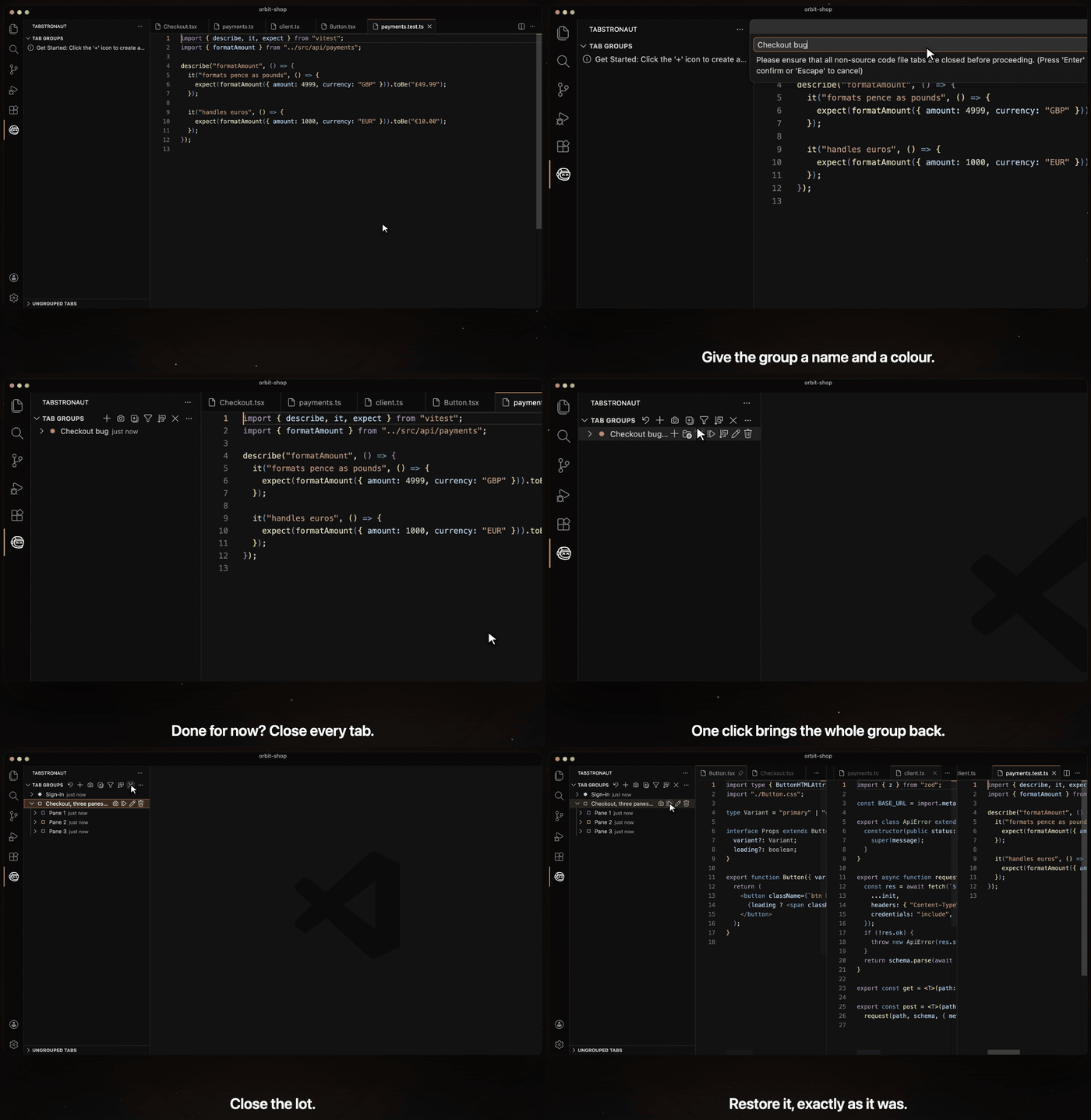
A tab manager for VS Code. Save groups of tabs and bring them back later, snapshot a
split-editor layout and restore it exactly, drag groups around and nest them, and copy
file paths or @ mentions for AI chat tools. Every action has a keyboard
shortcut. It placed 4th in the Entelect Tech Accelerator competition.
About
I'm a software engineer at The Craneware Group. Before that I was at Entelect, where I worked on sales planning for De Beers (RabbitMQ, React with SignalR) and led front-end work on a greenfield Angular project for Standard Bank. I have a BSc in Electrical and Information Engineering from Wits, plus Azure and AWS certifications, and I once built a deep learning model to decode LDPC codes.
Away from the keyboard I run long distances. My first marathon was the Joburg North City Marathon, after 18 weeks of training.